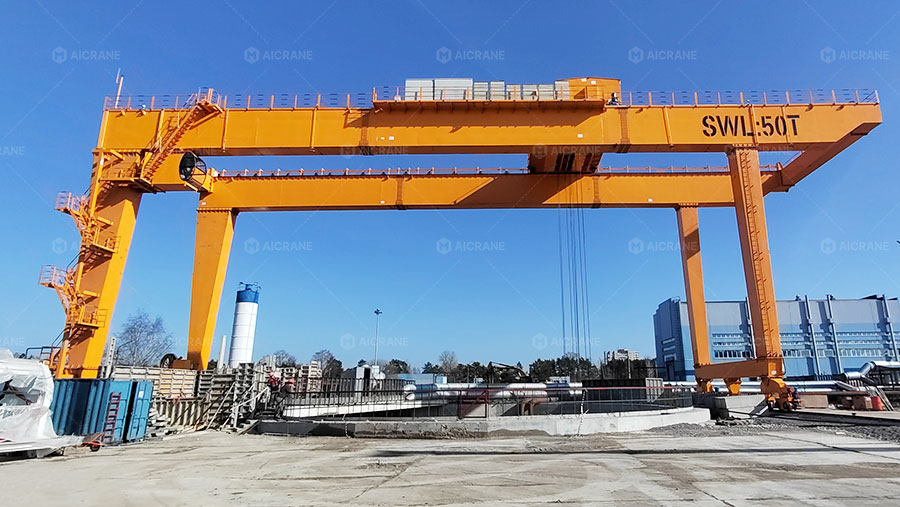
Gantry cranes are essential equipment in factories, warehouses, shipyards, and heavy industries for lifting and transporting heavy loads efficiently. Among them, a 50-ton gantry crane is considered a heavy-duty crane suitable for handling large equipment, steel coils, containers, and other industrial cargo. While selecting or designing a gantry crane, multiple technical parameters influence not only the crane’s performance but also its overall cost. Two of the most critical factors are lifting speed and trolley travel speed. Understanding how these speeds affect both operational efficiency and cost is vital for manufacturers, engineers, and buyers.
Understanding Lifting Speed in Gantry Cranes
Lifting speed refers to the rate at which the hoist raises or lowers the load vertically. It is usually measured in meters per minute (m/min) or feet per minute (ft/min). In a 50 ton gantry crane, lifting speed can vary depending on the design, motor power, control system, and intended operational duty.
Factors Affecting Lifting Speed
-
Hoist Motor Power: Faster lifting requires more powerful motors capable of generating sufficient torque to lift the rated load.
-
Gearbox Ratio: The mechanical transmission system determines how efficiently motor power translates into vertical movement.
-
Duty Cycle: Cranes designed for frequent lifts at high speed may require reinforced components to withstand fatigue.
-
Safety Considerations: Extremely high lifting speeds can compromise load stability, increase sway, and pose operational hazards.
Impact of Lifting Speed on Crane Cost
The lifting speed directly affects the initial investment in a 50-ton gantry crane in several ways:
-
Motor and Drive System: Higher lifting speeds demand larger, high-performance hoist motors. These motors are more expensive and often require sophisticated control systems for smooth acceleration, deceleration, and load handling.
-
Structural Reinforcement: When lifting speed increases, dynamic forces on the crane’s main girder, legs, and trolley rise. To safely handle these forces, the crane structure must be reinforced, increasing material costs.
-
Control System Complexity: Faster lifting may require variable frequency drives (VFDs) or other advanced control technologies to maintain precision and safety, adding to electrical and automation costs.
-
Maintenance Costs: High-speed lifting generates more wear on ropes, hooks, brakes, and gears. Over time, this translates into higher maintenance and replacement costs.
In practice, a balance is required between lifting speed and cost. For a 50-ton crane, standard lifting speeds typically range from 3–10 m/min. Increasing speed beyond this range can significantly raise the overall gantry crane cost while offering diminishing operational benefits, particularly if the crane’s operational workflow does not demand such rapid lifts.
Understanding Trolley Speed in Gantry Cranes
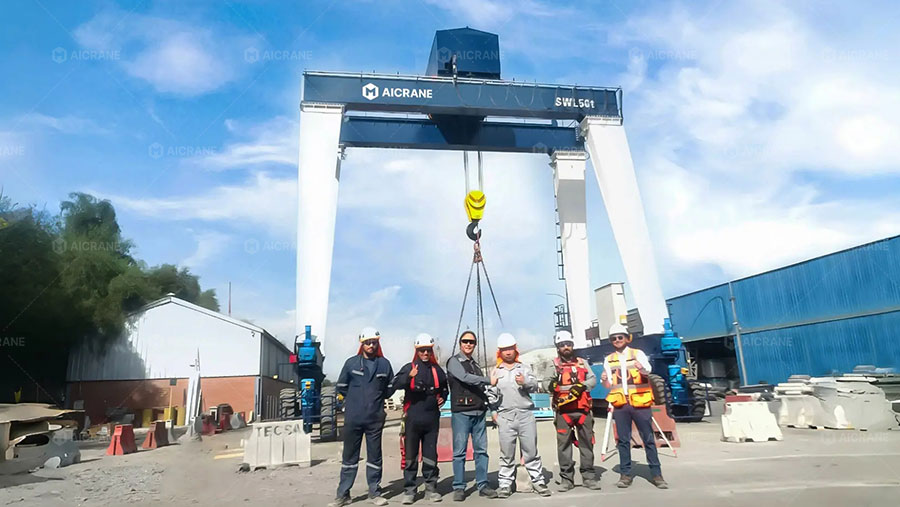
Trolley speed refers to the horizontal movement of the hoist along the crane bridge. Like lifting speed, trolley speed is measured in meters per minute and is crucial for efficient load handling over the crane span.
Factors Affecting Trolley Speed
-
Bridge Design and Span: Longer spans require stronger girders and precise alignment to ensure smooth trolley travel at higher speeds.
-
Trolley Motor Power: A more powerful trolley motor is required to move the hoist and load quickly across the span, especially when handling maximum rated loads.
-
Load Weight: Heavier loads reduce the feasible speed of the trolley for safety and stability.
-
Control Precision: Faster trolley movement requires accurate positioning and braking to prevent collisions and load sway.
Impact of Trolley Speed on Crane Cost
Trolley speed influences cost through multiple channels:
-
Motor and Gearbox Requirements: High-speed trolleys necessitate larger motors and advanced gear systems, which are more expensive and may require regular maintenance.
-
Bridge Reinforcement: Faster trolley movement increases dynamic forces on the crane bridge and supporting legs. To prevent excessive deflection or fatigue, manufacturers may increase the girder thickness or use higher-grade steel, adding to the material cost.
-
Safety Devices: High-speed trolley operations often require limit switches, anti-collision devices, and advanced braking systems to maintain operational safety, increasing both hardware and installation costs.
-
Operational Efficiency vs. Cost Trade-off: While faster trolley speeds improve productivity by reducing horizontal travel time, the incremental cost for high-speed systems can be substantial, making it necessary to analyze whether the speed increase justifies the added expense.
Combined Effect of Lifting and Trolley Speeds
The interaction of lifting and trolley speeds can amplify both structural demands and cost implications. For instance:
-
Lifting a heavy load at high speed while moving the trolley rapidly creates combined dynamic forces that can stress the crane’s main girder and supporting legs more than either speed alone.
-
Structural elements may need to be oversized, increasing steel consumption, fabrication complexity, and assembly time.
-
Motors, drives, and control systems must handle simultaneous high loads and fast motion, increasing both initial equipment cost and long-term maintenance.
Therefore, the overall cost of a 50-ton gantry crane is not simply additive for lifting and trolley speeds; it often grows exponentially as both speeds increase.
Practical Guidelines for Cost-Effective Speed Selection
-
Assess Operational Requirements: Determine the typical load weight, lift height, span length, and frequency of operation. High lifting and trolley speeds are justified only if operational efficiency gains outweigh the additional cost.
-
Balance Speed and Safety: Excessive speeds increase sway, reduce positional accuracy, and require advanced safety devices, which can inflate costs unnecessarily.
-
Use Two-Speed or Variable-Speed Systems: Many industrial gantry cranes offer dual-speed hoists and trolleys or variable frequency drives (VFDs) to balance efficiency and cost. Operators can use low speeds for precise placement and high speeds for rapid transit of lighter loads.
-
Material and Structural Optimization: Advanced modeling (FEA) can help design crane structures that withstand dynamic forces efficiently, minimizing overuse of materials while supporting higher speeds.
-
Maintenance Planning: Faster operations generate higher wear, so operators must budget for more frequent inspections and component replacements when specifying high-speed cranes.
Case Example: Cost Implications
Consider two 50-ton gantry cranes with identical spans and load capacities:
-
Crane A: Lifting speed 5 m/min, trolley speed 20 m/min. Standard motor and structural design.
-
Crane B: Lifting speed 10 m/min, trolley speed 40 m/min. Requires reinforced girders, high-capacity motors, VFDs, and additional safety devices.
Crane B’s initial cost can be 20–40% higher than Crane A due to motor upgrades, steel reinforcement, control systems, and safety equipment. However, if the operational environment demands rapid loading/unloading cycles (e.g., a busy port), the investment may be justified by increased throughput.
Conclusion
The lifting speed and trolley speed of a 50-ton gantry crane have a significant impact on both performance and cost. Higher speeds require larger motors, reinforced structures, advanced control systems, and additional safety devices, all of which increase the initial investment and long-term maintenance expenses.
Selecting the optimal speeds requires a careful balance between operational efficiency, safety, and budget. By analyzing workflow requirements, expected load patterns, and environmental conditions, buyers and engineers can make informed decisions that maximize productivity without incurring unnecessary costs.
Modern solutions like variable-speed drives, dual-speed systems, and structural optimization using advanced modeling allow gantry crane manufacturers to provide cranes that meet diverse operational needs while controlling cost. Ultimately, a well-designed 50-ton gantry crane balances lifting and trolley speeds with structural strength, durability, and safety, ensuring reliable and cost-effective performance for years of industrial operation.